
06:29 · Beauty & Spa · Kenosha, WI
The Happy Waxer
- Client
- The Happy Waxer
- Location
- Kenosha, WI
- Industry
- Beauty & Spa
- Services
- Mobile-first rebuild, One-tap booking, Service page rewrite, Local search tuning
- Live site
- thehappywaxer.com
A booking link buried three taps deep was quietly costing appointments every week. Put booking in the thumb zone on every screen and wrote the service pages the way clients ask for them.
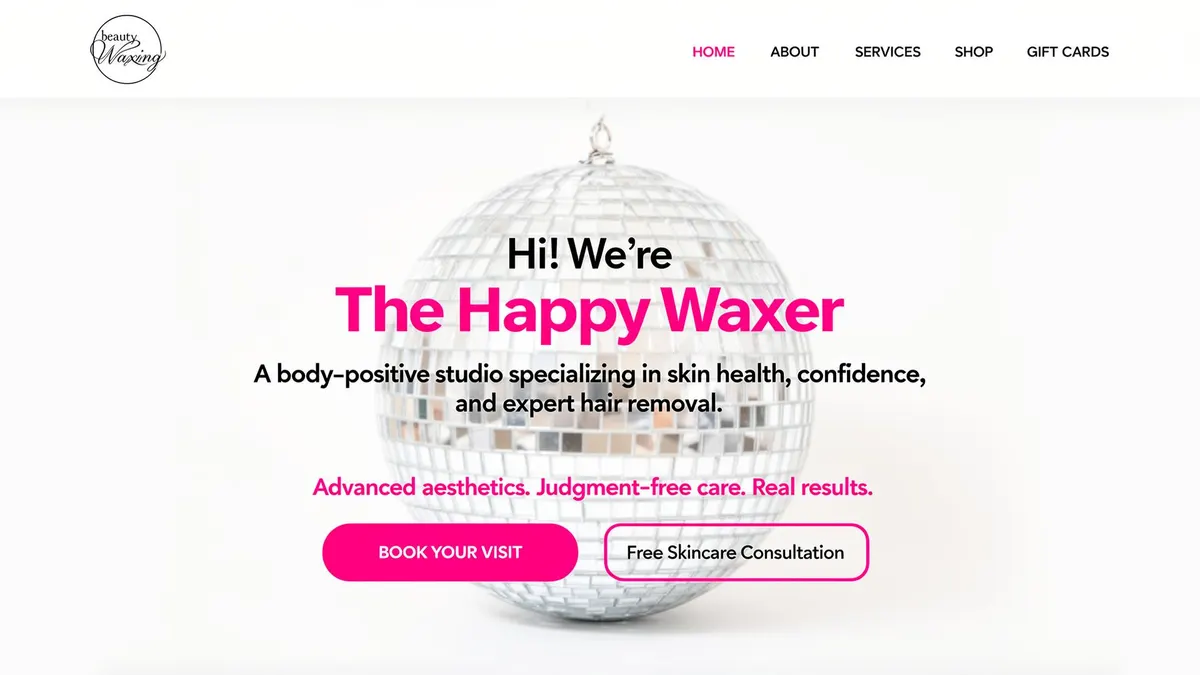
The Happy Waxer is a Kenosha waxing studio, and almost all of its traffic arrives on a phone. Before the rebuild, almost all of that traffic had to hunt for the booking link.
The specific problem was distance to action: booking sat three taps deep, behind a menu, on a layout designed for a desktop that most visitors never used. Every extra tap quietly cost appointments, and the service pages described treatments in industry language rather than the words clients type when they search.
We rebuilt the site mobile-first. Booking is permanently reachable in the thumb zone on every screen, so the next step is never more than one tap away regardless of where someone stops reading.
Then we rewrote the service pages in client language — what a service is, what it feels like, how long it takes, how to prepare, how much it costs — with each service given enough real content to stand as its own answer to a real search.
Bookings rose 45%. The studio now appears for the specific service queries that previously routed people to national directories, because the site finally says the specific things those searches are asking about.
The desktop version stayed premium on purpose. It carries the credibility work — the studio, the standards, the hygiene, the people — which is what a first-time client checks before they trust anyone with an appointment.
The AI search effect follows directly from the rewrite. When a service page states in plain language what a treatment is, how long it takes, how to prepare, and what it costs, an assistant asked about that treatment in Kenosha has something specific and attributable to quote. Industry shorthand gets skipped; client language gets cited.
The takeaway for appointment-based businesses is that booking distance and content specificity are the same problem viewed from two ends. Shorten the path to the action, then make sure each service reads like a complete answer to the question that brought someone in. Neither half works nearly as well without the other.
Trust details did a lot of unglamorous work here too. Cancellation and rescheduling expectations, aftercare guidance, and preparation notes were written out rather than left to be asked at the door. It reduced no-shows and awkward front-desk conversations, and it added several pages of genuinely useful content that answers real searches — content a competitor using a template simply does not have.
One last structural note: each treatment page was written to stand alone. Someone landing on a single service from a search should be able to book without needing the rest of the site, so every page carries the price, the duration, the preparation, and the booking action on its own. That independence is what lets individual pages rank and be quoted, rather than funnelling everything through a homepage that has to be all things to everyone.
What the build included
- Mobile-first rebuild
- One-tap booking
- Service page rewrite
- Local search tuning